Atlassian Team ‘26 Europe in Amsterdam: What Swarmit Is Taking Away


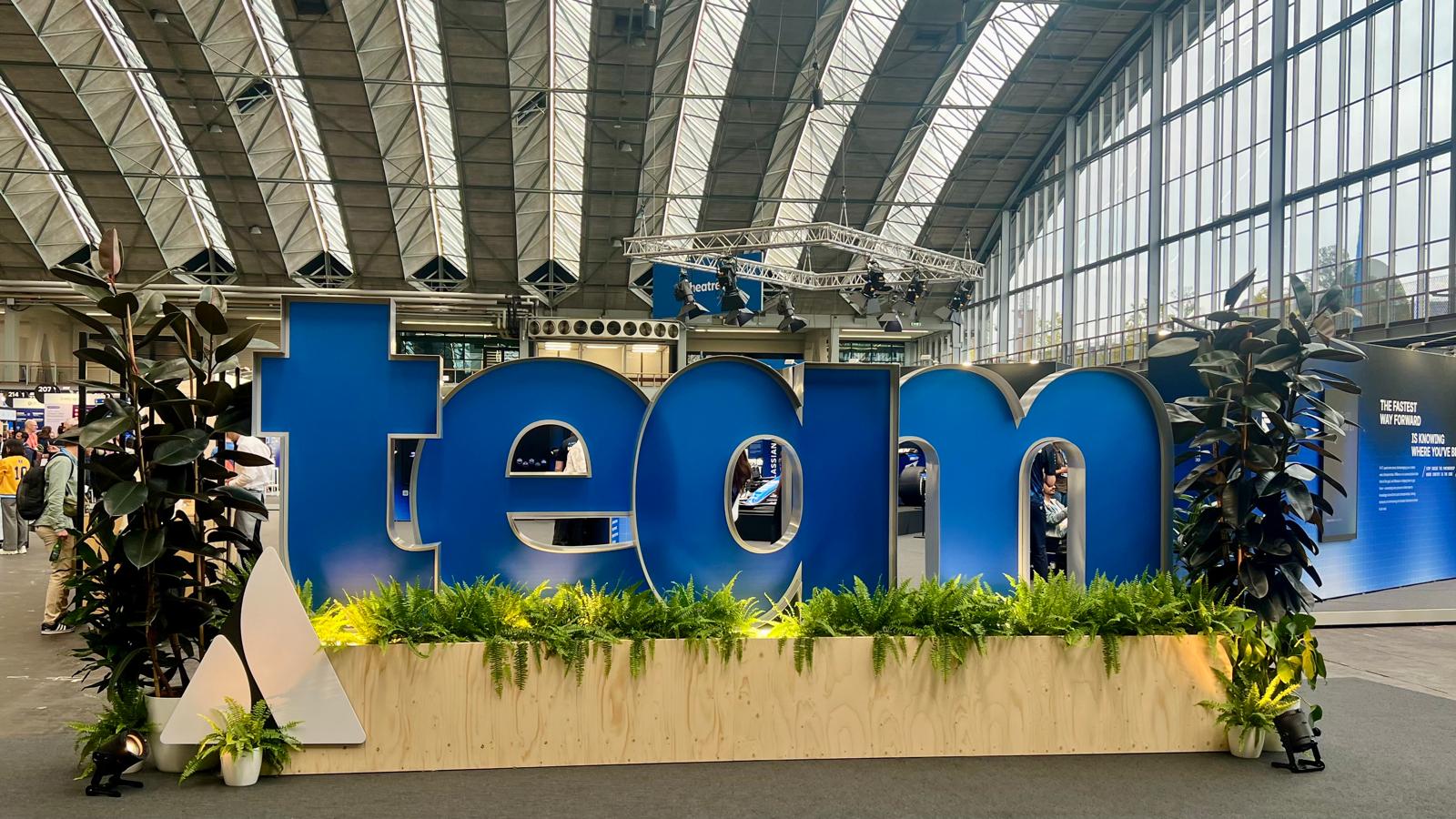
Atlassian Team ‘26 Europe took place from 6 to 8 October 2026 at RAI Amsterdam, and Swarmit attended with two perspectives: Anja Fuchs, Atlassian Consultant, and Roseline Bosshard from Marketing. The goal was clear: take away as much as possible. Anja connected with the community on technical topics and gathered new tools and features for our customers. Roseline held many conversations with existing and new partners to prepare joint marketing activities and events for 2027.
In this post, we summarise what happened over the three days, which announcements around Rovo, Teamwork Graph, Loom and AI governance are relevant for Swiss companies, and what we are taking away in concrete terms. At the end, we answer the most frequently asked questions about Team ‘26 Europe in an FAQ.
Day 1
Arrival, community and a fresh look at Confluence
The first day was all about meeting people. After a dinner together the evening before, we started with plenty of conversations, the first sessions and the typical team spirit that makes these events special.
Women of the Atlassian Ecosystem
Anja started the day at the community meetup of the Women of the Atlassian Ecosystem. It was impressive to see how many women are shaping the Atlassian ecosystem and the tech industry. Braindates followed, including one on exit strategies for Marketplace apps, which sparked intense discussions.
Product Lounge Breakfast at Elevatic
Roseline was invited to breakfast in Elevatic’s Product Lounge, an ideal start for first conversations in a relaxed atmosphere.
Atlassian talk: How Confluence is changing knowledge work
Also on the first day, we attended a talk by Atlassian. The central question was how Confluence is changing modern knowledge work. A live demo showed Smart Links, Rovo and Remix, among other things. With Remix, content in Confluence can be turned into visuals in just a few clicks, for example as a graphic or an overview.
The key message: Jira and Confluence have long been more than tools for engineering teams. Marketing, HR, Finance and project organisations benefit just as much when knowledge and work come together in one place. We couldn’t agree more.
First partner meetings
Alongside the sessions, we used the first day for numerous conversations with app vendors and partners from the Atlassian ecosystem. Anja discussed the details of their apps with several Marketplace partners: Which new features are planned, how can the apps be combined with Rovo and the Teamwork Graph, and which use cases fit our customers’ requirements? Direct conversations like these provide insights you won’t find in any product documentation.
Our marketing focused on partner programmes. Many app vendors are developing their programmes further for 2027, with new formats for joint campaigns, co-marketing and events. For us, this is a solid basis for jointly planning webinars, content and events in the DACH region and in Romandie. Several of these conversations were with partners we had previously only known from video calls, and it is exactly these in-person meetings that make collaboration much easier.
Day 2
Mike Cannon-Brookes’ keynote and the key announcements
On 7 October, Atlassian co-founder and CEO Mike Cannon-Brookes opened the second day with the Founder Keynote, with Anja sitting in the front row. His core message: AI should not work alone in a chat window, but within the team. Big numbers on the slides, plenty of humour and live demos that all worked made the keynote engaging. Only at the very end did the power cut out mid-sentence.
AMP: Humans and AI agents on the same team
With the Agentic Multiplayer Protocol (AMP), humans and AI agents work together directly in Jira, Confluence and Loom. Each agent has an owner, its own profile and traceable activity. According to Atlassian, the rollout began with the announcement.
Rovo, Teamwork Graph and Artifacts
With Rovo Work, Rovo gets a new mode in Rovo Chat for complex, multi-step tasks: Rovo proposes a plan, the team adjusts it and approves the execution. Atlassian has not yet announced an availability date. The context comes from the Teamwork Graph, which according to Atlassian comprises more than 80 connectors and 250 billion connected objects. For engineering teams, there is the new Rovo Code Search app, and with the Artifacts app, AI-generated content, including content from external AI tools, gets permanent, permission-controlled storage that can be embedded in Confluence and Jira. Rovo Desktop for Mac was also announced on site.
Loom and Figma: A plus for marketing
For us in marketing, this was the highlight: agents can be briefed via Loom video (Record for Agent, currently in open beta), and AI overlays (early access) make videos far more visually appealing. The demo with Figma and Loom showed how messages can reach the target audience more clearly and with less effort.
Governance and security
As AI grows, governance moves to the forefront. Atlassian announced agent accounts and an inventory for non-human identities, which will allow admins to manage all agents centrally and revoke access with a single click. Until then, Rovo Work, for example, runs under the identity of the person who starts a task. Already available is Guard Premium, which detects sensitive content through historical and real-time scanning and sets guardrails for Rovo Chat and connected tools. On top of that comes local EU AI inference.
EU AI inference: What does it mean for Swiss companies?
In Amsterdam, Atlassian announced the rollout of local EU AI inference. According to Atlassian, this means that prompts, processing by the language model and outputs stay within Europe. Frontier models from OpenAI, Anthropic and Google will continue to be used.
Data residency is not the same as AI processing
For Anja, this announcement was one of the highlights. In many conversations with Swiss customers about Rovo, the biggest concern was not what AI can do, but where the data goes. Atlassian has supported data residency in Switzerland for some time. However, data residency governs where data is stored. AI inference concerns where the model processes the data. Until now, European customers could store their data in Europe, but AI processing usually took place in the US.
Open questions from a Swiss perspective
The announcement is a clear step in the right direction, but the details are decisive:
- What does EU inference mean for customers whose data is stored in Switzerland?
- Is processing in the EU sufficient, or does it have to stay within Swiss borders for certain organisations?
- Which models are available under EU inference, and which Rovo features are covered?
Different rules apply to some features: based on current information, the code context for Rovo Code Search is stored in the US and activated automatically for paid Bitbucket workspaces connected to Rovo.
Our recommendation: before rolling out Rovo, clarify with your data protection officers which requirements apply to storage location and processing. We are happy to support you with this assessment.
Partners, marketing and community: The value of meeting in person
After the keynote, many conversations followed with existing and potential partners. Finally meeting people in person whom you have only known from video calls makes a big difference. Team ‘26 Europe is the ideal place for this in the Atlassian ecosystem.
More marketing than expected
A pleasant surprise: there were far more marketers on site than expected. This led to concrete ideas for joint campaigns, webinars and events with partners in the DACH region and in Romandie.
Community moments
A special moment: Anja is an Atlassian Champion and was invited to the Atlassian Champion Dinner. The Champions programme recognises people who actively share their knowledge with the community and help shape the ecosystem. At the dinner, Anja even met Mike Cannon-Brookes in person, a highlight after nine years in the Atlassian ecosystem. Encounters like these show what this community is all about: behind the technology are people.
Reliex, Rewind and Refined also hosted an evening at the Heineken Experience, a great setting for further conversations.
Day 3
Podcast and Closing Keynote
The third day started with a podcast recording with Janet from Rewind. The episodes will be released in the coming weeks.
The morning focused on AI sessions, exploring how AI teammates with specialised skills can help teams work not only faster, but smarter.
The Closing Keynote “What becomes possible” combined two perspectives. In a customer panel with Atlassian CEO Mike Cannon-Brookes, Reddit CTO Amit Puntambekar and Hilary Lanham from Lloyds Banking Group, the discussion centred on what becomes possible when connected context forms the foundation for AI at scale. This was followed by a fireside chat with actress and singer Hannah Waddingham, known as Rebecca Welton from “Ted Lasso”. Her role symbolises what many organisations struggle with: only those who break down silos, trust their team and share context truly move forward.
The event wrapped up with the Bash and the afterparty, which were truly legendary.
What Swarmit is taking away from Team ‘26 Europe
At Atlassian, AI is becoming a team member, and that is exactly where clarity on governance, data protection and adoption is needed. For our customers, we see four key points:
- Introduce Rovo and agents in a targeted way: With AMP, agent accounts and Rovo Work, AI becomes more productive, but also more complex. A clear permission concept is essential, because Rovo shows everything a user already has access to.
- Consider data residency and AI inference together: Especially for Swiss organisations, a thorough analysis pays off before AI features are activated broadly.
- Use Jira and Confluence beyond engineering: Marketing, HR and business teams benefit from Confluence, Remix, Loom and Rovo just as much as development teams.
- Strengthen visual communication with Loom: AI overlays and agent briefings via video save time and make messages easier to understand.
Would you like to know what the Team ‘26 Europe announcements mean for your Atlassian environment? Contact us for a no-obligation conversation with our Atlassian experts.
FAQ
Frequently asked questions about Atlassian Team ‘26 Europe
When and where did Atlassian Team ‘26 Europe take place?
Atlassian Team ‘26 Europe took place from 6 to 8 October 2026 at RAI Amsterdam. The day before, the Partner Accelerate programme was held for partners. Mike Cannon-Brookes’ Founder Keynote was on 7 October.
What is Atlassian’s AMP?
AMP stands for Agentic Multiplayer Protocol. It is the foundation for collaboration between humans and AI agents in Jira, Confluence and Loom. Each agent has an owner, its own profile and traceable activity.
What is Atlassian’s EU AI inference?
With local EU AI inference, Atlassian restricts processing by language models to models hosted in the EU. Atlassian announced the rollout at Team ‘26 Europe.
Is EU AI inference sufficient for Swiss companies?
That depends on internal and regulatory requirements. Data residency in Switzerland governs where data is stored, EU inference governs where it is processed. Organisations that require processing within Switzerland should clarify the details with Atlassian or a partner such as Swarmit.
What’s new in Rovo?
Rovo gets Rovo Work, a mode for complex, multi-step tasks, and Rovo Code Search, a new app for engineering teams. Rovo Desktop for Mac was also announced. With the Artifacts app, AI-generated content, including content from external AI tools, gets a permanent, permission-controlled home.
What is the Teamwork Graph?
The Teamwork Graph connects data from Atlassian and third-party tools and provides Rovo and agents with the context they need. According to Atlassian, it comprises more than 80 connectors and 250 billion connected objects.
Which announcements are relevant for marketing teams?
Particularly relevant are the AI features in Loom, such as AI overlays (early access) and agent briefings via video (open beta), the integration with Figma, and Remix in Confluence for turning content into visuals.